

Understanding the Migration Landscape
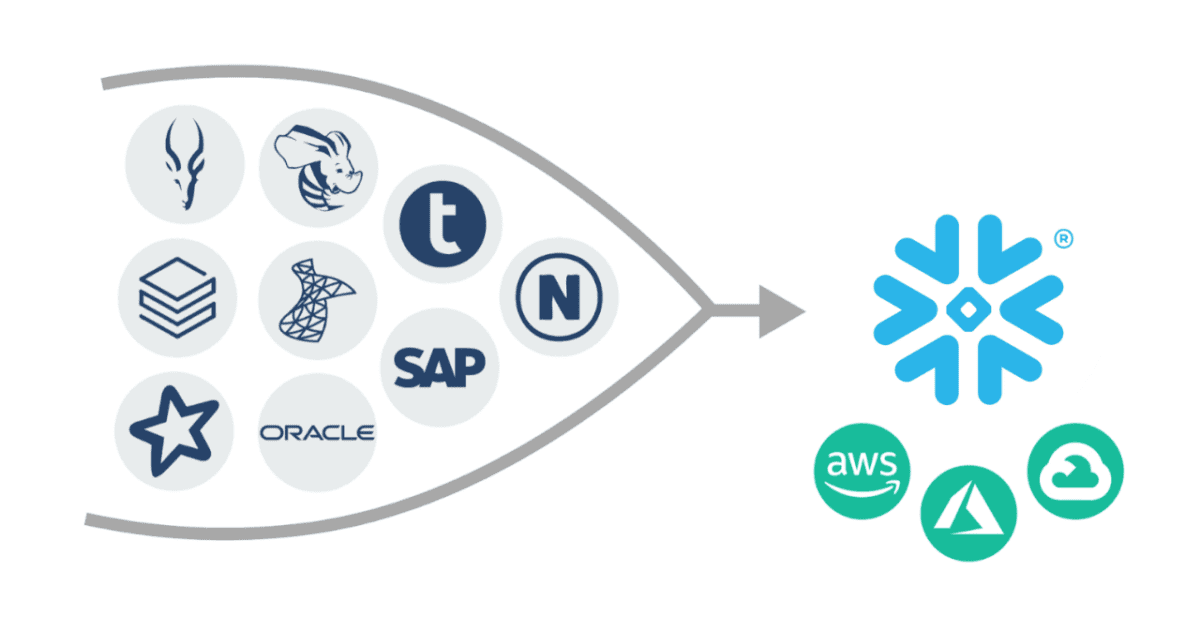
Before diving into tactical execution, it's essential to understand why organizations migrate to Snowflake and what success looks like. Traditional data warehouses struggle with scalability, performance bottlenecks, and rigid architectures that can't keep pace with modern analytical demands. Organizations face challenges including slow query performance, limited concurrent user support, complex maintenance requirements, and inability to handle semi-structured data.
Snowflake addresses these challenges through its unique architecture that separates storage and compute, enabling elastic scaling, near-infinite concurrency, and support for diverse data types. The benefits extend beyond technical improvements to include dramatic cost reductions through consumption-based pricing, improved time-to-insight for business users, and foundation for advanced analytics and AI initiatives.
However, realizing these benefits requires more than simply moving data from point A to point B. Successful migrations transform how organizations think about data architecture, governance, and analytics delivery.
Phase 1: Strategic Assessment and Planning
Every successful Snowflake migration begins with comprehensive assessment. This phase establishes the foundation for all subsequent work and typically takes 4-6 weeks for mid-sized organizations. Start by documenting your current state thoroughly. Map all data sources, data flows, ETL processes, reports, dashboards, and user access patterns. Identify business-critical workloads, performance pain points, and compliance requirements. Equally important is defining your target state and success criteria. During planning, determine your migration approach and resource requirements. Secure executive sponsorship and dedicated resources.
Phase 2: Architecture Design and Proof of Concept
With strategy defined, focus shifts to detailed architecture design. Key architectural decisions include database and schema organization, warehouse sizing and clustering strategies, role-based access control design, and integration patterns. A focused proof of concept validates architectural decisions before full-scale implementation. Use the POC to establish performance baselines, validate cost projections, and identify potential challenges early.
Phase 3: Migration Execution
With architecture validated, systematic migration execution begins. A phased approach minimizes risk while delivering incremental value. Data migration involves data quality improvements, schema optimization, and incremental refresh mechanisms. ETL process migration demands careful attention; use migration as an opportunity to modernize. Testing is non-negotiable across data accuracy, query performance, and business process continuity.
Phase 4: Optimization and Adoption
Post-migration optimization ensures you realize Snowflake's full potential. Monitor query performance, implement best practices, and manage costs actively. User adoption drives ultimate success through training, documentation, and feedback.
Conclusion
Snowflake migration represents significant opportunity for organizations ready to modernize data infrastructure. Success requires strategic planning, proven methodologies, technical expertise, and commitment to ongoing optimization. Organizations that approach migration systematically realize transformative value from their cloud data platform investment.
This article offers insights and practical guidance for professionals navigating cloud data platform migration and AI initiatives. Intelligence Horizon brings extensive experience across industries. Contact info@intelhorizon.com to discuss how we can support your organization.
This article offers insights and practical guidance for professionals navigating cloud data platform migration and AI initiatives. Intelligence Horizon brings extensive experience across industries. Contact info@intelhorizon.com to discuss how we can support your organization.
This article offers insights and practical guidance for professionals navigating cloud data platform migration and AI initiatives. Intelligence Horizon brings extensive experience across industries. Contact info@intelhorizon.com to discuss how we can support your organization.
This article offers insights and practical guidance for professionals navigating cloud data platform migration and AI initiatives. Intelligence Horizon brings extensive experience across industries. Contact info@intelhorizon.com to discuss how we can support your organization.
This article offers insights and practical guidance for professionals navigating cloud data platform migration and AI initiatives. Intelligence Horizon brings extensive experience across industries. Contact info@intelhorizon.com to discuss how we can support your organization.
This article offers insights and practical guidance for professionals navigating cloud data platform migration and AI initiatives. Intelligence Horizon brings extensive experience across industries. Contact info@intelhorizon.com to discuss how we can support your organization.